


Treating an allergic reaction in a dog or cat is really three different jobs, and which one your pet needs depends on how fast things are moving. A scatter of hives often settles with an antihistamine and a few hours of close watching. Anaphylaxis is the other extreme, where epinephrine and oxygen in the first minutes are what keep your pet alive. Chronic allergies sit outside both, a years-long itch managed season by season, and telling the three apart decides whether you are driving in tonight or building a plan for the summer.
Swelling that comes on at nine at night and a dog who chews his paws raw every August are the same problem at two very different speeds. Alpine Animal Hospital in Pocatello answers urgent and emergency calls around the clock, whether the patient is a cat with a puffy face or a horse covered in welts. We can stabilize your pet when a reaction turns severe, and for the slower, itchier version, finding the trigger is part of the ongoing care we provide for dogs and cats. If your pet's skin or breathing changes, or they suddenly vomit, weaken, or collapse after a sting, a vaccine, or a new medication, call us, day or night.
Hives, Anaphylaxis, and Chronic Itch: The Quick Read
- Hives or mild facial puffiness usually settle with medication and a few hours of watching, though they still need a call that day.
- Anaphylaxis moves in minutes and looks different by species: vomiting, weakness, and collapse in dogs, sudden labored breathing in cats.
- Human combination allergy products and human pain relievers can poison a dog or cat at a single over-the-counter dose, so the medicine cabinet stays shut until you've talked to us.
- Chronic allergies are controlled rather than cured, and the plans that hold up combine topical care, parasite prevention, medication, and a real search for the trigger.
How Fast Does an Allergic Reaction Need to Be Seen?
How fast a reaction needs to be seen depends on how many body systems are involved. Months of itchy skin can wait for a scheduled visit, while breathing trouble, weakness, vomiting, or collapse after an exposure means you call us on the way in.
| Urgency | What you're seeing | What to do |
| Monitor and schedule | Seasonal itching, recurring ear inflammation, chewed paws, thinning fur with nothing else wrong | Book a workup to find the driver instead of chasing flares |
| Same day | Hives, facial or muzzle swelling, a sting with spreading swelling, new coughing or wheezing | Call us and come in today |
| Right now | Labored or open-mouth breathing, pale gums, weakness, repeated vomiting, collapse | Call as you head out so we know you're coming |
While you're getting ready, note when things started and anything new in the last hour, such as a sting, a vaccine, a pill, or a fresh chew, and bring the wrapper if you can grab it. Lift a lip and look at the gums, because pale or bluish gums during a reaction mean oxygen delivery is already failing. Skip the human medicine cabinet: combination allergy products that add a decongestant or a pain reliever can poison a pet at a single over-the-counter dose, ibuprofen and acetaminophen are never safe, and never induce vomiting unless we've told you to. We see reactions as urgent care visits during open hours, and someone is on call after hours.
What a Same-Day Reaction Looks Like
Hives rise as firm welts within minutes to a few hours, and on a cat or a fluffy dog you'll feel them before you see them. They need a same-day call because they can be the first stage of a reaction that keeps escalating. Coughing fits, wheezing, and a crouched posture with the neck stretched forward are how feline asthma usually presents, and an allergic flare can tip minor asthma into a breathing crisis within the hour. Stings are often a one-day problem, but a sting on the face or throat, several at once, or any whole-body sign alongside the swelling makes it an emergency, and the same holds for a horse who finds a wasp nest.
What Are the First Signs of Anaphylaxis in Dogs and in Cats?
Anaphylaxis in dogs tends to arrive looking like a stomach emergency, with sudden vomiting, diarrhea, weakness, and collapse rather than the throat swelling many families are braced for. Cats show it in their breathing instead, with sudden labored or open-mouth breathing as the first sign.
In a dog who vomits, wobbles, and has pale gums within minutes of a vaccine, the giveaway is the timing rather than the vomiting itself. Open-mouth breathing in a cat is never normal, not after a sprint, not in the heat, not in the carrier, and a cat breathing that hard should be handled as little as possible on the way in. Either species can move from itching to shock without a clear warning stage, which is why a reaction that looks mild still gets a phone call.
What Triggers a Reaction, and Can a Vaccine or New Medicine Cause One?
Most reactions trace back to one of three sources: environmental allergens, food proteins, and insects or parasites. Vaccines and medications belong on that list too, and while most dogs and cats take their vaccines without any trouble, a shot or a new prescription can set off a reaction in the hours after it's given.
- Environmental allergens: Pollen, grass, mold, and dust mites drive atopic dermatitis, the chronic itch that often starts as a seasonal flare and gradually stretches across more of the year.
- Food proteins: Beef, chicken, dairy, egg, and fish lead the list, and a food allergy itches year-round instead of seasonally. Many of these pets also have soft stool or occasional vomiting alongside the skin signs.
- Insects and parasites: Flea bites are the big one, and a sensitized pet can chew the tail base raw from a handful of them. Bee and wasp stings cause the fast, dramatic reactions, while mites add to the background itch.
Plenty of pets collect more than one trigger, and the chewing, the redness, the ear flare, and the thinning coat look alike no matter what started them, so guessing costs months.
Reactions to a Vaccine or a New Prescription
Mild soreness, one sleepy afternoon, or a small firm lump at the injection site falls inside the normal range. Facial swelling, hives, vomiting, or labored breathing in the hours after a shot are vaccination reactions that need a call rather than a night of hoping they settle, and the risk runs higher in small-breed dogs and in pets given several vaccines at one visit. Antibiotics, flea products, and anesthetic drugs come up most on the medication side, and a reaction often holds off until the second or third exposure, since the immune system has to meet something before it can overreact to it. Tell us about any past reaction, even a vague one from years ago, before we give a vaccine or send home a prescription, because that history changes what we pick, whether we pre-treat, and how long we keep your pet afterward.
Why Does My Pet Itch All Year Long?
Chronic allergic skin disease is a slow inflammatory problem rather than a reaction that escalates. The immune system keeps reacting to something your pet meets constantly, the skin barrier weakens, and the bacteria and yeast already living on the surface overgrow. It's miserable and it recurs, but it doesn't turn into anaphylaxis. Most of the allergy work in our small animal practice is this slower version, and a pet who starts itching at two will usually still be allergic at ten.
Where the Itch Shows Up on Dogs and Cats
- Dogs: Licking and chewing come first, then redness, thinning fur over the feet, flanks, and belly, and the yeasty smell of infected skin. An hour of determined licking can turn a mildly itchy patch into a raw, oozing hot spot. Inflamed tissue between the toes, known as pododermatitis, and recurrent ear inflammation, known as otitis externa, are allergy problems far more often than hygiene ones, and three ear infections in a year means something deeper is driving them.
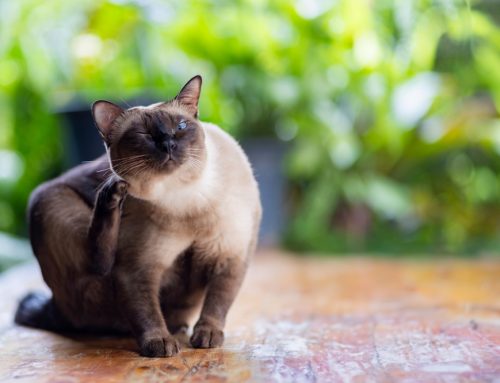
- Cats: Overgrooming thins fur into symmetrical bald patches along the belly and inner legs, and miliary dermatitis scatters small crusty bumps your fingers find before your eyes do. Raised, firm, sometimes ulcerated sores on the lip, belly, or inner thigh point toward eosinophilic granuloma complex. Many cats groom somewhere private, so what families bring us is the missing fur, not the licking that removed it.
What Will You Do for My Pet's Reaction?
Treatment splits the same way the reactions do. A severe reaction gets epinephrine, oxygen, and hours of monitoring here. Chronic itch gets layers: clear the infection on the skin or in the ears, quiet the itch while that heals, then treat the allergy driving it so the next flare is smaller.
The First Minutes of a Severe Reaction
Epinephrine goes in first, because it opens airways and props up blood pressure faster than anything else available. From there it's an IV catheter for fluids and drug access, oxygen for a patient working to breathe, and antihistamines and corticosteroids to blunt the rest of the immune response, with bloodwork drawn while treatment runs. Your pet then stays for hours of monitoring, because some patients have a biphasic reaction, a second wave that builds hours after the first seems to have settled, and it's far safer for that to start here with a catheter still in place than on the drive home. For a pet with a confirmed history of severe anaphylaxis, we'll talk through whether an epinephrine auto-injector belongs at home and when you'd use it.
Clearing the Infection, Then Treating the Allergy
Chronic cases start with a look under the microscope. A skin scraping rules mites in or out and shows what has overgrown on the surface, and reading an ear swab under the microscope, called ear cytology, tells us whether yeast, bacteria, or both are behind a flared ear, which decides the medication. Treating the infection and stopping there means treating it again before long, because the allergy that broke the skin barrier is still running.
What Keeps the Flares From Coming Back?
Four habits do most of the work between visits: year-round parasite control, medicated topicals, grooming and cleaner air at home, and omega fatty acids. Pets who get all four usually need less medication than pets leaning on one.
- Year-round parasite control: A single flea bite can keep a sensitized pet itching for weeks, which is why year-round parasite prevention matters even through a Pocatello winter. A prescription preventive works better than most of what sells off a shelf, and our doctors will match one to your pet's lifestyle. Fleas on top of a pollen allergy push the total itch past what either causes alone, which is a common reason a dog who was comfortable falls back into an itching cycle.
- Medicated topicals: Shampoos carry anti-itch, antimicrobial, and barrier-repair ingredients, but they need a full ten minutes of contact time, so lather, then stand there and talk to your dog about the importance of staying in the tub before rinsing. Between baths, sprays, mousses, and wipes handle the spots where flares start: facial folds, feet and the skin between the toes, and ears.
- Grooming and clean air: Brushing removes allergens that settle on the coat, and a wipe of the paws, face, and belly after outdoor time takes off a good share. Indoors, a HEPA filter where your pet sleeps and bedding laundered regularly lower the dust mite load.
- Omega fatty acids: They strengthen the skin barrier and reduce inflammation over months, so they help between flares rather than settling one.
Prescription Options for the Itch
Many allergic pets use more than one of these across a lifetime.
- JAK inhibitors (Apoquel, Zenrelia, Numelvi): Interrupt the itch signal within hours, which makes them useful for fast relief and for daily long-term control.
- Cytopoint: An injection for dogs every four to eight weeks that neutralizes an itch protein, and a good fit for established atopic dermatitis or a dog who fights a daily pill.
- Cyclosporine (Atopica): Modulates the immune response over weeks, for long-term control when daily immune modulation suits the case.
- Corticosteroids: Broad, fast anti-inflammatory relief, used in short courses for acute flares rather than as a long-term plan.
- Antihistamines: Blunt the histamine response, simple to try, and helpful for a subset of patients.
Will My Dog or Cat Ever Stop Being Allergic?
Allergies get controlled rather than cured, though control can be good enough that you stop thinking about it for most of the year. Two routes work on the cause instead of the symptom: immunotherapy for environmental allergies and a diet trial for food. Both take months before you can judge them.
Can Allergy Testing and Immunotherapy Help?
Serum testing runs from a blood sample, while intradermal skin testing reads small injections of allergen in a shaved patch, and our team will help you decide which test fits your pet. Hair and saliva kits sold straight to families don't hold up, so skip them. Immunotherapy for environmental allergies works on the cause through customized sublingual drops or injections, and in published results up to 80% of pets show a meaningful drop in symptoms over a twelve to eighteen month course.
How Do You Test for a Food Allergy?
Pinning down a food allergy means an elimination diet trial, eight to twelve weeks on a hydrolyzed or novel protein diet with nothing else passing the lips, followed by a deliberate reintroduction of the old food. Hydrolyzed means the protein is broken into pieces too small for the immune system to recognize; novel means one your pet has never eaten. Blood tests aren't accurate enough to diagnose a food allergy, and over-the-counter limited-ingredient foods don't work for diagnosis either, since the same production lines run multiple recipes. One chicken-flavored chew in week six and the clock starts over.
What Pocatello Families Ask Us About Itching and Benadryl
Can I give my dog or cat Benadryl at home?
Plain diphenhydramine is often reasonable, but the dose depends on weight, so call us before you give it, and check the label for a decongestant or pain reliever, since those combination products are dangerous for dogs and cats. An antihistamine won't stop a serious reaction once it's underway, so if swelling is spreading or breathing has changed, skip the pill and call.
Why is my cat itchy in January?
Indoor allergens don't take a winter off. Dust mites live in bedding and upholstery year-round, fleas do fine in a heated house, and a food allergy itches the same in January as in July. An itch with no season at all points us toward food or dust mites rather than pollen, which shifts the plan toward a diet trial and tighter parasite control.
My puppy is already scratching. Isn't she too young for allergies?
Environmental allergies usually begin between six months and three years of age, so a scratchy puppy or kitten is well within range. Before we land on allergies, young pets get checked for mites, fleas, and ringworm, which are more common at that age, look much the same, and in the case of ringworm and mange can spread to the rest of the household. When the itch does turn out to be allergic, starting early tends to mean fewer years of repeat infections.
Help for an Itchy or Swollen Pet, Any Hour
If your pet is itchy, swollen, or just had a reaction that scared you, book a visit at Alpine Animal Hospital in Pocatello, and phone us at any hour if a reaction is moving fast.



Leave A Comment